
Today we see it everywhere, and the truth is that we have been using it in different ways for thousands of years. But the curious thing is that aluminum was not identified as a substance in itself until the 19th century.
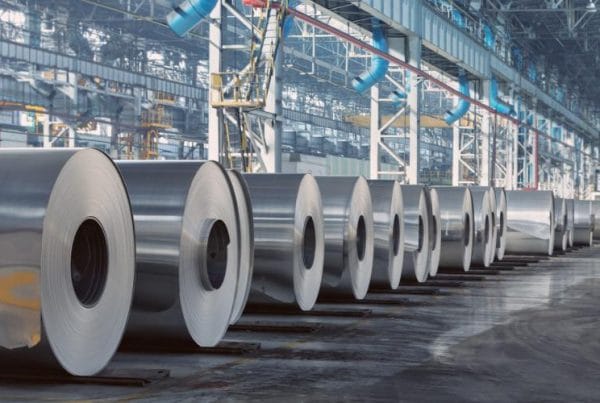
It is difficult to look around today and not see something made of aluminum. This material is the third most abundant element in the Earth's crust (of which it constitutes 7.3%), the most abundant metal, and by far the most widely used non-ferrous metal for industrial purposes.
We find it in everyday life in countless forms. Doors, windows, and enclosures, airplanes, cars, and bicycles, outdoor furniture, cans and cartons, cables and computers, tennis rackets, and everyday aluminum foil for wrapping food are all made from aluminum. This substance is also found in aspirin and antacids, as well as naturally in rubies, emeralds, and sapphires. Even its sulfate, a salt, is used in water purification and the production of writing paper.
Despite being everywhere, aluminum was not isolated, or discovered in its pure form, until relatively recently. It was already being used, unknowingly, in ancient Mesopotamia, where containers rich in aluminum were modeled from clay and highly prized for their preservative properties. In Babylon, as well as in Pharaonic Egypt, it was used in the manufacture of medicines and dyes by incorporating alum. However, it was only detected as a substance in its own right two centuries ago.
Son of electricity
In the 18th century, French scientists, including Antoine Lavoisier, the father of modern chemistry, revealed the oxide of a metal that had not yet been identified. The subsequent discovery of aluminum was made by two prominent researchers from other countries: the British Humphry Davy and the Danish Hans Christian Oersted, both remembered for their pioneering studies of electrochemistry and electromagnetism.
Thanks to the then-novel technique of electrolysis (a method of using electricity to separate the components of a substance), in 1808 Davy managed to separate the metal from its slag seconds before it combined with iron. Despite the brevity of this experiment, he proposed the wordaluminum toname his new discovery, one of many he made (he also named chlorine).

Later, in 1825, Oersted achieved a more lasting result using the same procedure. He produced stable aluminum, although its quality still left much to be desired.
An ally of progress
The Wright brothers would not have been able to take flight, nor would powered aviation, without aluminum. Their first successful flight in 1903 at Kitty Hawk was due to the replacement of steel parts with others made of the new metal. It was as strong as steel (depending on the alloy), but three times lighter.
Aluminum continues to play a leading role in commercial aviation: today, 80% of an airplane is made of this metal. It also revolutionized space exploration: nine out of ten parts of the space shuttles launched by NASA are made of this element.
Meanwhile, a mineral had been discovered in France that would become the most abundant source of aluminum to date. Named bauxite after the small Provençal village of Les Baux, where it was discovered in 1821, almost half of this raw material was alumina, an oxide from which aluminum could be refined. But there was still a long way to go to obtain half a ton of alumina from a ton of bauxite, with which a quarter ton of aluminum could be produced, as is the case today.
This was the work of other scientists who worked independently of each other. In the mid-19th century, the German Friedrich Wöhler improved on Oersted's process and demonstrated the incredible lightness of the metal. However, it was Frenchman Henri Sainte-Claire Deville who deserves the credit for transforming the optimized substance into a social phenomenon. Deville produced the first commercially viable aluminum by replacing the potassium used by Wöhler in the amalgam with sodium, which was cheaper.
From precious to everyday
Deville conducted his tests in an experimental factory on the outskirts of Paris, financed by Napoleon III himself, who was very interested in this prodigious element to renew the arsenal of his Armed Forces.
The platform chosen by the emperor to present this advance could not have been more spectacular. It was the 1855 World's Fair, the same event that established Bordeaux wine worldwide. With more than five million visitors, the event made pure aluminum—displayed in ingots alongside the Crown Jewels, no less—the latest craze in industry.

However, it was still a prohibited substance. Napoleon III had, in fact, consulted his goldsmiths about the possibility of using it to create cutlery with which to surprise his guests at banquets. After all, aluminum was still worth more than silver, gold, or platinum. That is why it was produced in tiny quantities and displayed as a precious metal.
Increasingly affordable
This situation began to change in the decade following the Exposition, when the first large-scale commercial dynamos made it possible to generate huge amounts of electricity at low cost. This removed the main obstacle to the mass production of aluminum. This was demonstrated separately in 1886 by two inventors in their twenties, Charles Martin Hall in the United States and Paul Héroult in France.
Meanwhile, the element became a symbol of progress, being used as the capstone on the Washington Monument and, shortly thereafter, on the statue of the Greek god Anteros that stands atop the central fountain in Piccadilly Circus, in the heart of London.

Thanks to the availability of more electrical energy for less money, Hall and Héroult were able to devise a new electrolytic process that made it possible to obtain the metal at a ridiculously low price. Two years later, Austrian Carl Josef Bayer took another giant step forward by devising a method, also very economical, for extracting alumina from bauxite.
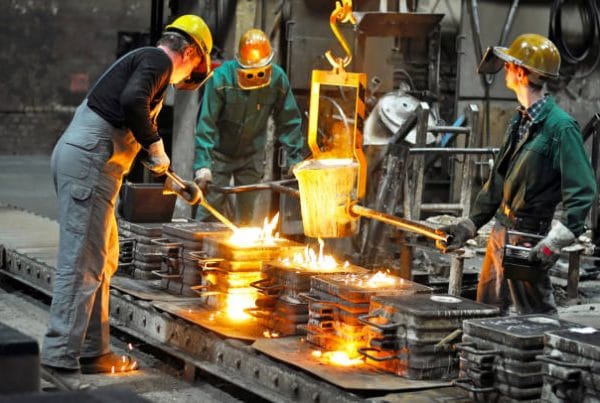
Both advances triggered thealuminum boom. Today, the Bayer chemical process continues to be the standard for refining the ore into oxide, which is then converted, using Hall-Héroult electrolysis, into the most industrialized metal on the planet since the discovery of iron in prehistoric times.https://lavanguardia-github.github.io/hyv/banner-hyv-tv-2b.html
As a result of this phenomenon, the price of aluminum plummeted in 1890, making it affordable to everyone. That year, it cost 80% less than when Napoleon III's Exposition was held. Five years later, it was so cheap that it began to be used in construction. Its definitive success, however, came in the 20th century.
The century of aluminum
The construction, pharmaceutical, and food sectors, as well as innovative industries such as automotive, aeronautics, and aerospace, demanded aluminum. The exponential increase in its production increasingly reduced its monetary value until it became completely democratized. Thus, some 7,000 tons of aluminum were manufactured in 1900, 100 times more at the beginning of World War II, and from the following decade to the present day, its production has been around 30 million tons per year.
This triumphant increase explains why, since the mid-20th century, it has been the most widely used metal after steel, and why its production is almost double that of all non-ferrous metals combined. Despite its short history as an industrialized material, few elements are as necessary today as aluminum.
Versatile in the kitchen
The food industry, the third largest consumer of aluminum—after construction and transportation—found a real gold mine in it. Tasteless and odorless, a good preservative and insulator, impermeable even in sheets as thin as 0.007 mm, and easily moldable, it has been used to manufacture "silver" paper since 1910 and Tetra Paks, cans, and beverage bottles since the 1960s. Unfortunately, around that time, kitchen utensils that could be toxic also appeared.
In the 1980s, questions began to arise about the safety of aluminum cookware, as this metal can pose serious health risks if ingested, inhaled, or in contact with the skin in high concentrations. According to some studies, it can cause anything from dementia to severe tremors.
The good news is that high levels of aluminum, which are the only dangerous ones (not regular exposure, by any means), have only been detected in specific contexts. For example, in the air and water of mines and refineries where this substance is processed, where special precautions are taken.
This text is part of an article published in issue 532 of the magazineHistoria y Vida.