
- That would be more than enough to eliminate the global deficit and then some
- The stockpiled aluminum is enough to meet India's demand for an entire year
- There are 1.8 million metric tons awaiting a ruling on dumping
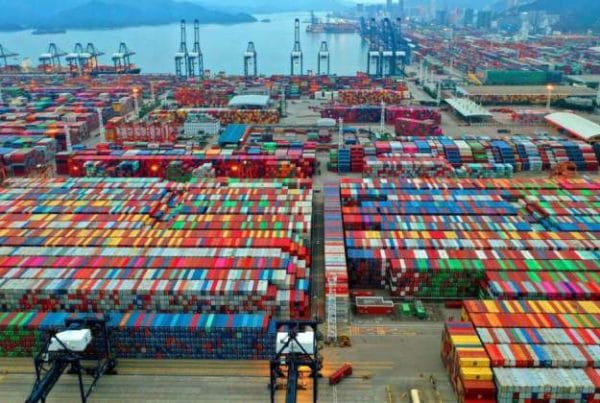
In an industrial park an hour away from the Vietnamese city of Ho Chi Minh, you can seemountains of metal—weighing in at several metric tons—wrapped in black tarps. These mountains, in addition to being towering, are one kilometer long and hide a “treasure” estimated to be worth 5 billion dollars. Furthermore, this “treasure” has become one of the most coveted commodities during the global economic recovery, given its high demand and relative scarcity at this time.
At meetings of aluminumtradersand producers, this is common knowledge and a frequent topic of discussion. Vietnam’s aluminum inventories are the largest ever recorded—a completely abnormal situation in an industry that is currently struggling to build up stockpiles amid high demand for this metal. So why doesn’t Vietnam release these aluminum stocks into the market at a time of high demand and high prices?

The reason is that this metal cannot be moved—for now. At the heart of the matter are Vietnam’s customs authorities, whohave tied up these thousands of metric tonswhile awaiting a resolution that has yet to materialize. Meanwhile, manufacturers of everything imaginable—from auto parts to beer cans—are competing to buy this metal, which is essential for dozens or hundreds of products.
To put the scale of aluminum stockpiles in Vietnam into context, one could say theyare equivalent to the total annual consumption of India, the world’s second-most populous country, according to Duncan Hobbs, a commodities analyst at Concord Resources who has been covering the metals markets for 25 years.
The market's largest deficit in two decades
"We're seeing the deepest shortage in the global market in at least 20 years, and these reserves would not only fill that shortage but also leave you with some to spare," the expert says.
This treasure is being held as part of a U.S.-led anti-dumping investigation in 2019 that focused on a Chinese billionaire. Vietnamese authorities say all of this metal was stockpiled by the Chinese firm Global Vietnam Aluminium, known as GVA, and that it may be linked to these controversial practices. The investigation has not yet been concluded, although it appears there is a lack of evidence to implicate GVA.
The 1.8 million metric tons of aluminum remain in storage under the watchful eye of security guards. However, an official interviewed byBloombergsays that small amounts are being taken from that stockpile for the GVA production line, but not enough to have any impact on global aluminum prices.
The dramatic surge in aluminum prices has sent them soaring 50% since this mountain of aluminum was seized. If this pile of aluminum were ever to start moving, the impact on the market could be seismic, according toBloomberg. It would be more than enough to wipe out the global deficit that has emerged in the aluminum market this year, and a fire sale could trigger a drop in prices.
How's that aluminum?
However, CRU—one of the key consulting firms relied upon by the industry—believes that the size of those inventories could be lower because some of the aluminum may have become unusable. The London-based firm estimates that some of the metal is more than 10 years old and would likely have to be sold as scrap anyway.
"Normally, inventory is available at market prices, but one of the problems with this material is that it's not entirely clear under what circumstances it would be available," says Ross Strachan, a senior aluminum analyst at CRU in London. "There is little evidence that Vietnamese inventories can provide any comfort to consumers."
However, what this mountain of metal can offer is a lesson in the turbulent history of the aluminum market. It is a market that can shift from oversupply to a shortage in a short period of time. Inventories cannot be accumulated indefinitely, so they do not serve as a perfect buffer against changes in supply and demand, as they do in other markets.
Aluminumtradershave spent much of the past decade concerned aboutthe massive surplus that built up after the global financial crisis,as its return to the market could have further weakened prices.
But over time, demand began to recover and inventories started to fall to the current level, where there is a clear shortage in the market. However, in the early stages of the pandemic, it seemed that the market would once again face a surplus of aluminum due to the halt in investment across all aluminum-intensive sectors.
Now, with demand booming and China putting the brakes on supply, the general consensus is thatthe outlook foraluminum priceshas never been brighter, while inventories are plummeting just when manufacturers need them most.
"Inventories have been declining at a very rapid pace, something no one was prepared for," explains Kamil Wlazly, a senior metals analyst at Wood Mackenzie in London.
Beyond Vietnam
Beyond the specific case of Vietnam, the industry’s shift toward shortages is evident at other major industrial ports around the world. Satellite images show how the massive stockpiles in New Orleans, owned by Castleton Commodities, have been drastically reduced as the tariffs imposed by Donald Trump on aluminum have forced the company to draw down its domestic inventories.
The LME warehouses in Detroit and the Dutch port of Vlissingen are now virtually empty after having held more than3.5 million metric tons at the peak of storage bybanks and traders. The story in Rotterdam is similar.
But one could argue that the situation is more serious in China, where total inventories nationwide now stand at around 1.2 million metric tons—equivalent to two weeks of demand—according to estimates by the research group AZ China.
The most striking sign of the growing shortage can be found in the country's internal data, which show how the world's leading producer is now becoming a net importer of aluminum as domestic production cuts intensify. After flooding the global market with aluminum for years, China is now being blamed for a rapid decline in global aluminum reserves.
Via ElEconomista