
Starting on January 1, 2026, the European Union will definitively implement the Carbon Border Adjustment Mechanism (CBAM), an unprecedented climate policy that will transform the dynamics of international trade in products with a high carbon footprint, including aluminum.
At Alueuropa, we have thoroughly analyzed the scope of this measure, its technical functioning, and the strategic implications it will have for producers, importers, and consumers across Europe.
What is CBAM?
The CBAM seeks to prevent carbon leakage, i.e., European industries relocating to countries with less stringent climate regulations. To achieve this, a carbon cost will be imposed on certain imported products, equivalent to what European manufacturers already pay under the Emissions Trading System (ETS).
During the transitional phase (until the end of 2025), importers are required to report the emissions of their products. From 2026 onwards, they will have to purchase CBAM certificates for each ton of CO₂ embodied in imported goods.
The impact on aluminum
Aluminum is one of the sectors most affected by the CBAM, as its production process is highly energy-intensive, and its carbon footprint varies dramatically depending on the source used (hydroelectric, gas, coal).
Some key effects of CBAM on aluminum:
- Increased costs for carbon-intensive exporters (e.g., Mozambique, Bahrain, China)
- Incentives for decarbonization: aluminum produced from renewable sources gains competitiveness
- Reorganization of supply chains: European buyers will seek suppliers with certified low emissions
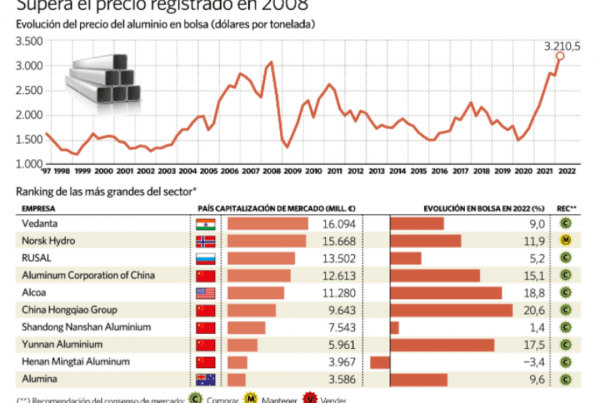
- Price pressure: the added cost of the CBAM is already influencing price increases on the LME (close to $2,900/t by the end of 2025).
A structural change
The CBAM is not just a climate policy; it is an economic tool that redefines what it means to be competitive in the European market. Sustainability becomes a central criterion, and carbon footprint becomes a price variable.
Exporting companies will have to adapt by investing in clean technologies, traceability, and emissions verification. For European players in the sector—such as Alueuropa—the CBAM represents an opportunity to lead the transition towards cleaner, more responsible aluminum that is aligned with the EU's climate goals.
Conclusion
With the CBAM coming into force, green aluminum will cease to be a differentiating factor and become a standard for access to the European market. In this context, innovation, transparency, and sustainability are key to maintaining long-term competitiveness.
At Alueuropa, we are prepared for this new scenario. We are committed to efficient, traceable production that is aligned with the principles of a low-carbon economy. We will continue to support our customers with up-to-date technical information, sustainable solutions, and industrial commitment.