

PNNL scientists have succeeded in increasing the conductivity of aluminum.
Scientists at PNNL (Pacific Northwest National Laboratory) are proposingways to increase the conductivity of aluminum, making it economically competitive with copper.
The first simulation of aluminum conductivity opens the door to experiments that, if fully realized, could lead to an ultra-conductive aluminum alternative to copper that would be useful in markets beyond transmission lines,revolutionizing vehicles, electronics, and the power grid, according to the authors.
"What if you could make aluminum more conductive, even 80% or 90% as conductive as copper? You could replace copper, and that would make a big difference because more conductive aluminum is lighter, cheaper, and more abundant," saidKeertiKappagantula, a materials scientist at PNNL and co-author of the research,in a statement."That's the overall problem we're trying to solve."
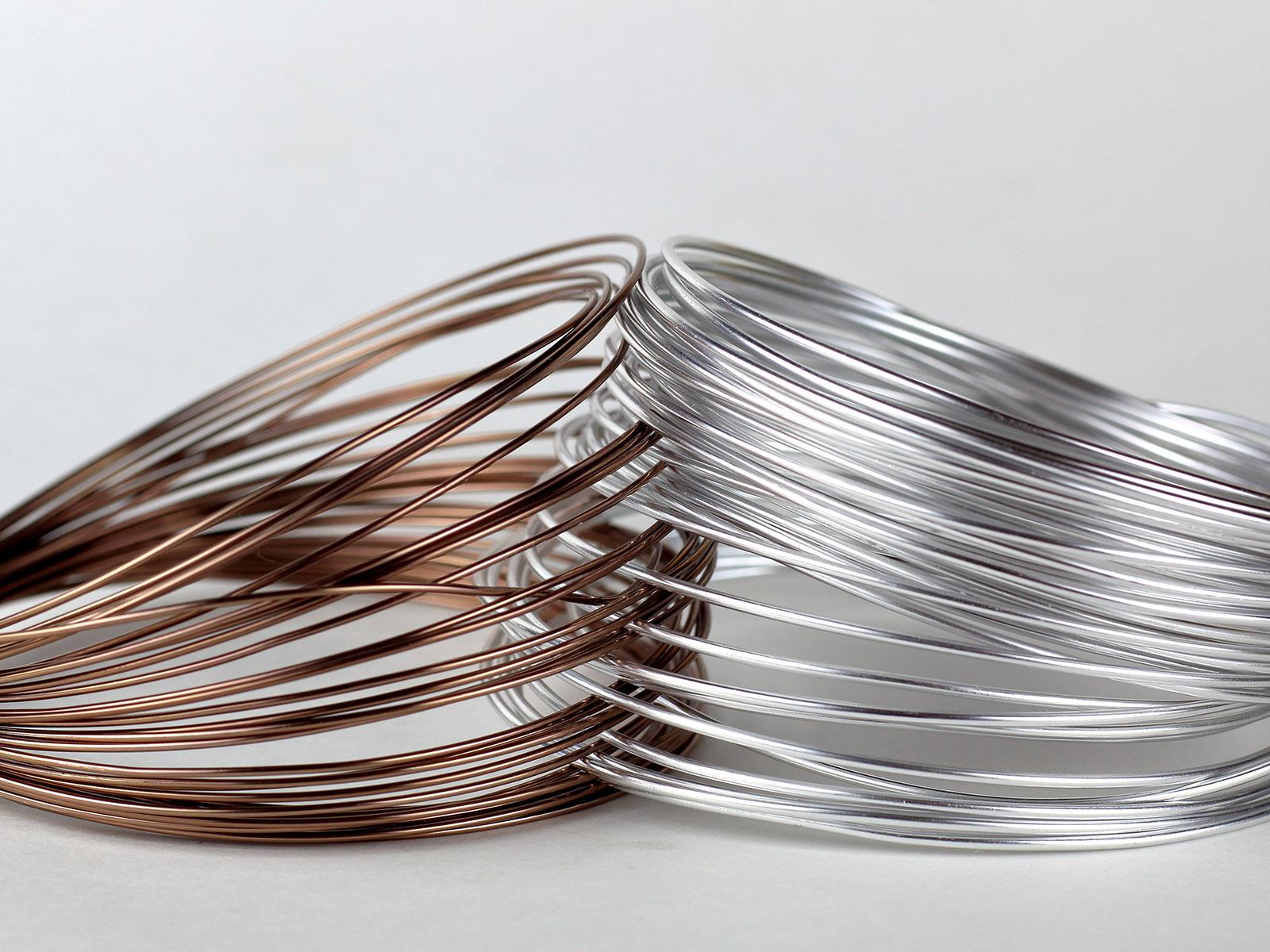
Demand for copper is rapidly outpacing its current availability, driving up its cost. Copper is an excellent electrical conductor, used in everything from portable electronic devices to undersea transmission cables that power the Internet, but there is no escaping the fact that copper is becoming less available and more expensive.
Features
These challenges are expected to worsen with the growing number of electric vehicles, which require twice as much copper as traditional vehicles.In addition, copper is heavy, which reduces the efficiency of electric vehicles.
Aluminum costs only one-third the price and weighs only one-third as much as copper, but it has only 60% of the conductivity. The relatively low conductivity of aluminum can be a limitation in some real-world applications.
"Conductivity is keybecause a lighter cable with equivalent conductivity can be used to design lighter motors and other electrical components, allowing your vehicle to travel longer distances," said Kappagantula.
"Everything from the electronic components in a car to the generation of energy and the transmission of that energy to your home via the grid to charge your car battery—anything that runs on electricity can become more efficient."

Increase conductivity
Increasing aluminum's conductivity would be a game changer. "For years, we thought metals couldn't be made more conductive. But that's not the case," Kappagantula explained."If you alter the structure of the metal and introduce the right additives, you can actually influence its properties."
To begin determining how much aluminum's conductivity could be increased, Kappangantula and PNNL postdoctoral fellow Aditya Nittala partnered with Ohio University professor David Drabold and graduate student Kashi Subedi to identify the effects of temperature and structural defects on aluminum's conductivity and develop an atom-by-atom recipe for increasing its conductivity.
This type of molecular simulationhad neverbeen performed for metals before, so the researchers had to be creative. They sought inspiration from semiconductors because previous research had successfully simulated conductivity in these silicon-based materials and some metal oxides.
The team adapted these concepts to work with aluminum and simulated what would happen to the metal's conductivity if individual atoms in its structure were removed or rearranged.These small changes added up to large gains in overall conductivity.
Look for it in other metals
The model's ability to simulate real-world conditions surprised even the team. "We didn't think these results would be so close to reality," Kappagantula said.
"This model simulation based on atomic structure and its different states is so accurate that I said,'Wow, that's right on target.' It's very exciting."
With a theoretical recipe for altering metal conductivity now clear, researchers plan to see how much they can increase aluminum conductivity in the laboratory to match the theory with experimental results. They are also exploringthe possibility of increasing the conductivity of other metals using the same simulations.
The research is published in Physical Review B, and the team hopes that more conductive aluminum will have far-reaching implications: any application that uses electricity or copper could benefit from the development of ultra-conductive, lightweight, and affordable aluminum.