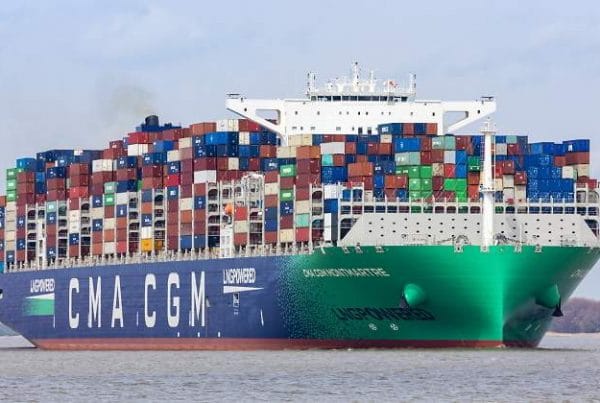

With the port operating at 25% of its capacity, the situation threatens to exacerbate supply chain problems.
Xi Jinping’s government has once again implemented drastic measures and newcoronaviruslockdownsthat will put even more strain on supply chains and, consequently,drive up inflation. Currently,the Port of Shanghai has more than 500 ships stranded, waiting to load or unload. It is the world’s largest port.
Due to these lockdowns,factories in China are operating at very limited capacity.With transportation suspended, companies are drawing down their inventory. In fact, one of Huawei’s top executives was emphatic this week in his prediction. “If Shanghai remains unable to resume work and production, starting in May, all technology and industrial players involved in Shanghai’s supply chainwill shut down completely—especially the automotive industry!”
As a result, the world’s largest port—whichhandled more than 47 million containers in 2021—and the factories in Shanghai, on which the global economy largely depends, remain under strain. Companies such asVolkswagenhavealreadystated that they feel “severely affected.” This has led them to declare themselves “unable” to meet current demand.
In practice,for consumers as a whole, this will mean increased pressure on inflation, which in Spain already stands at 9.8%. As demand remains steady or grows and the supply of products shrinks, prices will continue to rise even further—a perfect storm that has compounded the effects of the war in Ukraine and led to a significant price increase for some basic goods.
Withthe port operating at 25% of its capacity, the situation threatens to exacerbate the supply chain problems that arose in the wake of the 2020 pandemic and have yet to be resolved. Added to this are the road transport issues China is currently facing. In fact, according to Nius Diario,the number of trucks currently operating in Shanghai is estimated to be 20% lowerthan what would be normal for this time of year before the pandemic.