
Aluminum profiles according to their use
In general terms, we can distinguish three main types of aluminum profiles based on their use. We are referring to aluminum profiles for construction, architectural profiles, and industrial aluminum profiles. Below, we will learn more about these main groups.
Aluminum profiles in construction
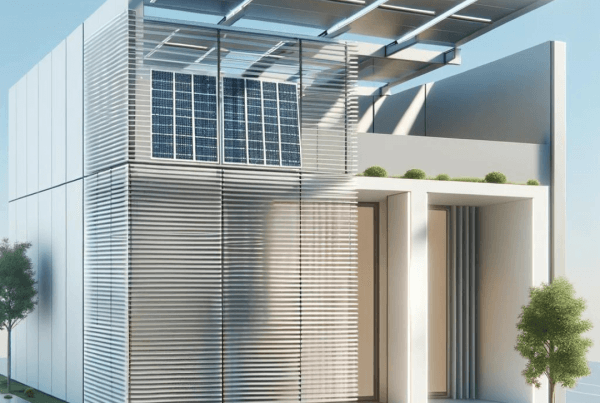
When we enter the field of construction, aluminum profiles offer high rigidity to shear and torsional stresses, despite being notable for their low weight. These are the profiles used in construction to produce structures for work platforms, stages, solar panels, and, increasingly, for the structures themselves of different types of buildings.
Aluminum profiles in architecture
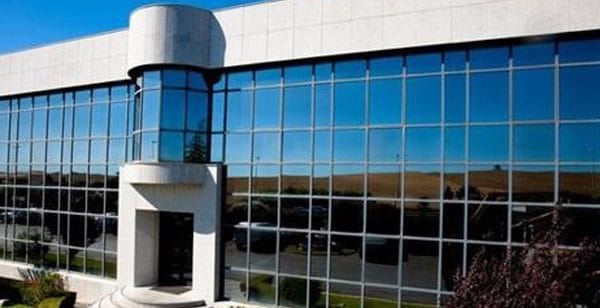
In the architectural profiles category, we find profiles whose applications require a specific surface finish. These profiles are mainly used for the production of window frames, doors, and curtain walls.
Aluminum profiles in industry
Finally, in the industrial sector, aluminum profiles are used for various purposes, especially those where surface quality or rigidity are not as important. However, if a good combination of both is required, along with other specific material characteristics, such as conductivity, this provides a wide range of uses in different areas of industry.
The production of aluminum profiles
The most commonly used process for producing aluminum profiles is known as extrusion. This allows profiles with a uniform cross-section to be produced. The method facilitates the production of low-cost parts without sacrificing quality, promoting tolerance and good mechanical properties.
What surface treatments can be applied to aluminum profiles?
We have previously discussed the treatments that can be applied to aluminum profiles. However, in general terms, we can highlight three main groups of treatments related to surface improvements of the profiles so that they can be easily adapted to the needs of the field at any given time and for each particular task.
- Polishing: this creates a smooth, shiny surface through rubbing or the use of a chemical product.
- Electrostatic painting: allows thin coatings to be obtained through processes that guarantee a better finish than with conventional liquid paint.
- Anodizing: finally, anodizing is a common coating process that increases the thickness of the natural oxide layer on the surface of aluminum, resulting in components that not only last longer but also become harder and more resistant to corrosion.
Let's talk about metal architecture
From new low-cost houses to the most luxurious architectural designs, aluminum has become a popular choice. This is mainly because it is considered the most suitable material for structures and facades in the field of architecture. Today, it is a metal that is highly valued by everyone, although in the past few people could actually afford it.
A time when it was worth as much as gold
Did you know that at one point in history, aluminum was as precious as gold and silver? That was in the 19th century. Aluminum was a powerful symbol of power and wealth, and it was very difficult to extract. That's why nobles used it in their daily lives until new extraction and purification techniques were discovered, making it available on the market for many industries.
Over the last few decades, however, architecture has regained its vital importance, perhaps easier to achieve than before, but just as valuable for its characteristics, performance, and benefits. Let's take a look at three iconic buildings to understand the functionality of aluminum in the United States, the United Kingdom, and Japan.
Selfridges
Selfridges is a building located in Birmingham, United Kingdom, which houses the Selfridges department store, with aluminum and anodized aluminum discs covering its entire façade. It is considered a true symbol of the city's regeneration and was designed by the firm Future Systems.
This building has a distinctive design that sets it apart from the rest of the Bullring Shopping Center project. It was built on a large steel structure. In addition, its curved facade is made of concrete and consists of 1,500 anodized aluminum discs on a blue background.
Ecoms House
In 2011, the Riken Yamamoto architecture firm in Japan designed the Ecoms House for the SUS Corporation. Located in Tosu City, it is a contemporary home that stands out for its low cost and speed of construction.
The house was built using modules and has a structure made entirely of aluminum. Its design is linked to traditional objects from Japanese culture, such as tatami mats, which inspired its façade.
The Ecoms House was built using prefabricated aluminum technology. The space in this house has three floors with a bathroom, two bedrooms, a kitchen, a storage room, and a work area.
Geisel Library
The Geisel Library was designed in 1970 for the University of California. The building is notable for its large glass windows, which are completely covered in anodized aluminum, creating a levitation effect when viewed from the outside.
It features an enormous concrete structure with 38,000 square feet of glass resting on top, creating a sense of weight and lightness and giving observers the illusion that it is a building capable of rising from the ground without actually needing support.
It should also be noted that, as this is a library, it is important to allow natural light to enter in order to facilitate reading for visitors. To achieve this, huge glass panels were installed, which fulfill this objective by filling the spaces with light without the need for large sources of electrical energy, thus saving money and protecting the environment.