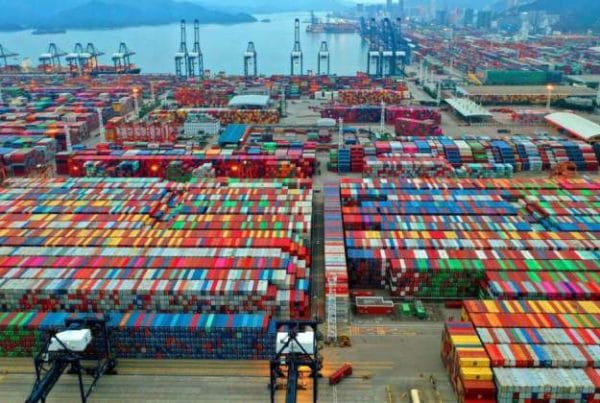

The positive outlook in China is also being reflected in the real estate market. On Monday, February 20, it was reported that new home sales in 16 Chinese cities rose for the third consecutive week, according to a private survey. The reopening of China's infrastructure and the policy of supporting real estate are boosting the construction sector and, therefore, the demand for its basic materials, including metals.
In fact, China's consumption of base metals and steel products accounts for a significant percentage of global demand. Last year, consumption grew at a relatively healthy pace and, according to Reuters, imports of copper and aluminum grew significantly—specifically, in the case of copper, the increase was almost 300,000 tons compared to 2021. At the same time, imports of mined concentrates reached a new annual record of 25.32 million tons.
However, this increase in demand clashes with a slowdown in supply in China and visible inventories that remain historically low.
Last year, China's aluminum production increased by 4.5% over the previous year, reaching a record high, driven largely by the relaxation of electricity supply restrictions. Now, the tables have turned. This week, it was reported that Chinese smelters were slowing down production, following a request from Yunnan province to aluminum producers to reduce energy consumption by 40-42% compared to September levels.
Aluminum capacity is expected to fall by 800,000 tons in Yunnan due to the cuts, according to industry information provider Shanghai Metals Market. For its part, Citi noted in a report that orders were given to cut another 415,000 tons of smelter capacity in the province over the weekend. Analysts estimate that production cuts at Chinese smelters since the middle of last year will reduce supply from the main consumer to less than 40 million tons by the end of February.
... and prices that are underpinned by raw materials
Against this backdrop, metal prices are reacting accordingly. Three-month CMAL3 aluminum on the LME rose 2.6% to $2,449 per ton on Monday. Yesterday, Tuesday, aluminum rose 0.6% to $2,472 per ton, after hitting its highest level since February 10 at $2,485.
"Aluminum prices have been supported by the prospect of a reduction in Chinese capacity due to energy availability. This could lead to production cuts when seasonal demand begins to pick up in March," says Geordie Wilkes, an analyst at Sucden Financial.
Furthermore, forecasts point even higher. Goldman Sachs Group has raised its price forecasts for aluminum, noting that increased demand in Europe and China could lead to a supply shortage. "The metal will likely average $3,125 per ton this year in London," analysts Nicholas Snowdon and Aditi Rai said. Goldman expects the metal to rise to $3,750 per ton over the next 12 months.
"With visible global inventories of only 1.4 million tons, 900,000 tons less than a year ago and now the lowest since 2002, the return of an aggregate deficit will quickly raise concerns of shortages," analysts said. "Faced with a much more benign macro environment, with headwinds from the dollar fading and a Fed rate hike cycle slowing, we expect upward price momentum to develop progressively in the spring," they added.
... and in the sector's listed companies
These projections will also be reflected in the business of international steel companies, as foreign suppliers also expect strong market growth, but this is already being reflected in the stock market prices of these types of companies.
If we look at two companies in the Spanish stock market,AcerinoxandArcelorMittal, they are two listed companies that could benefit not so much in terms of business but rather from the rise in raw material prices and its impact on the markets.
In the case of ArcelorMittal, the world's largest steelmaker outside China, 57% of its sales are concentrated in Western Europe, 17% in Brazil, 16% in NAFTA, and the remaining 13% in Eastern Europe and Russia. Meanwhile, the geographical distribution of Acerinox's turnover in 2021 was: 49% in America, 37.5% in Europe, 8.1% in Asia, 5.2% in Africa, and 0.2% in Oceania.
From a stock market perspective, the rise in raw material prices is reflected in the year-to-date figures for both companies (ArcelorMittal is up 15.7% and Acerinox 12.9%) and in the positive recommendations from analysts. If we take into account the consensus of the analysis firms surveyed by Reuters, the recommendation on Acerinox and ArcelorMittal shares is to buy, and thepotential is double digits for both, specifically 17.2% for ArcelorMittal and 28.3% for Acerinox.